



How Roswell Bond and Capital Improvement Projects Become Public Assets
When a new public facility opens, it is easy to focus on the finished product. But the journey begins long before construction.
Bond and Capital Improvement projects move through planning, public decision-making, design, procurement, community coordination, construction, and completion. Each step helps transform an identified community need into a lasting public asset.
Capital improvements are major investments in facilities and infrastructure intended to serve the community for years. These projects can include public safety facilities, parks, recreation amenities, parking structures, public buildings, and other City infrastructure.
Some capital projects are funded through voter-approved bonds. Others may use annual capital funds, grants, or a combination of funding sources.
Watch “From Bond to Built”
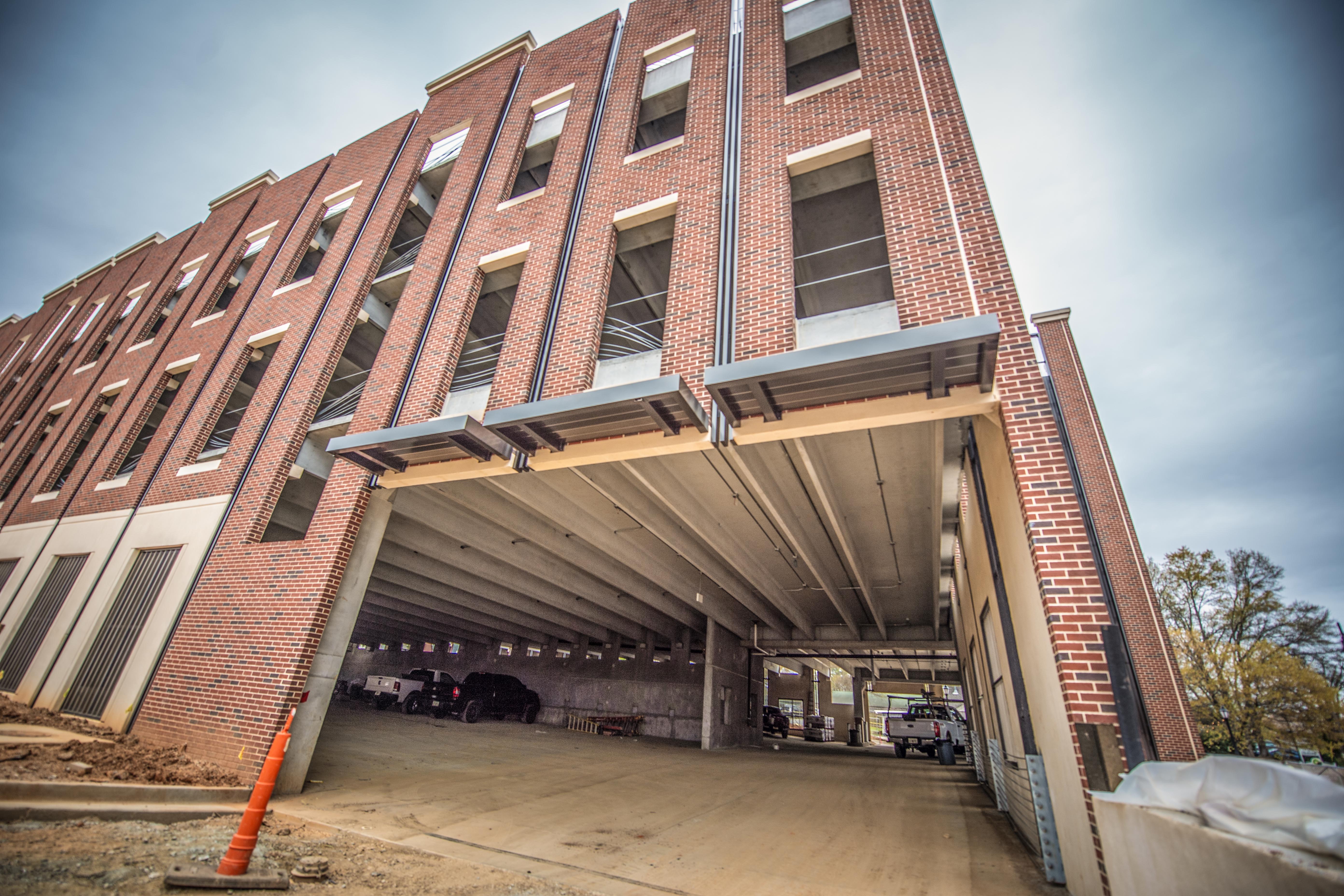
The video follows Roswell’s Downtown Parking Deck as an example of how a voter-approved project moves from an identified need to a completed public facility.
Although every project is different, Bond and Capital Improvement projects often travel a similar path.
The Journey at a Glance
The Idea Takes Shape → The Community Decides → Designing the Future → Building the Team → Preparing the Community → Rising from the Ground → Opening Day → A Project Completed
Some stages may overlap, occur more than once, or take longer depending on the project’s funding, size, location, design requirements, community impacts, and construction conditions.
The Idea Takes Shape
Every capital project begins with a need, challenge, or opportunity.The idea may come from long-range planning, facility assessments, operational needs, public safety requirements, community feedback, growth, or the need to replace aging infrastructure.Before identifying a specific solution, the City must understand what the project is intended to accomplish.Early questions may include:
What community need will the project address?
Who will use the completed facility?
Where could the project be located?
What size and features may be required?
How could it improve City services?
What might it cost?
How could it be funded?
For the Downtown Parking Deck, the idea grew from the need to improve downtown parking, support local businesses and events, and prepare for future growth.
At this stage, the project is still taking shape. The final design, cost, schedule, and construction plan have not yet been established.
The Community Decides
For bond-funded projects, the community plays a direct role in deciding whether the City should move forward with the proposed investment.
In 2022, Roswell voters approved funding for a new Downtown Parking Deck as part of the City’s Bond program.
Voter approval establishes the authority and funding path needed to advance approved Bond projects. However, it does not mean that each project is immediately ready for construction.
After the community approves a Bond program, the City must still:
- Confirm the project’s scope
- Establish a working budget
- Evaluate the proposed site
- Complete planning and design
- Select qualified project partners
- Communicate with affected stakeholders
- Award contracts
- Construct and inspect the project
Other Capital Improvement projects may be authorized through the City’s adopted capital budget, grants, or other approved funding sources.
Designing the Future
With the project authorized and funding identified, the City begins turning the idea into a buildable plan.
Depending on the project, this phase may include:
- Evaluating potential locations
- Completing surveys and site investigations
- Studying traffic and access
- Identifying utility needs
- Reviewing drainage and environmental conditions
- Developing architectural or engineering concepts
- Determining building and operational requirements
- Evaluating safety and accessibility
- Preparing cost estimates
- Developing an anticipated schedule
For the Downtown Parking Deck, City staff evaluated potential locations, studied traffic patterns, coordinated utilities, completed engineering, and developed the project’s design.
Design usually advances through several levels of completion and review. As more information becomes available, the project’s scope, layout, cost, or schedule may need to be refined.
These steps take time, but they help ensure the project is safe, functional, financially responsible, and designed to meet the community’s long-term needs.
Before a project can be built on the site, it must first be built through plans, decisions, and coordination.
Building the Team
Public projects require architects, engineers, contractors, equipment providers, and other professionals with specialized expertise.
The City selects these partners through an established procurement process designed to promote fairness, competition, transparency, and responsible stewardship of public funds.
Depending on the project, the process may include:
- Developing the scope of work
- Preparing a request for qualifications, proposals, or bids
- Publicly advertising the opportunity
- Answering questions from prospective firms
- Reviewing qualifications and pricing
- Interviewing or ranking firms
- Preparing a recommendation
- Receiving contract approval
- Finalizing the agreement
For the Downtown Parking Deck, the City selected a design-build team through a competitive procurement process. A design-build team combines design and construction responsibilities under a single contract.
Other projects may use separate contracts for design, construction, technology, equipment, or specialized services. A large project may therefore move through procurement more than once.
Only after the necessary contracts are awarded can the contracted work move forward.
Preparing the Community
Major public projects can affect the people who live, work, travel, or operate businesses near the project site.
Before construction begins, the City may meet with nearby residents, businesses, community organizations, and other stakeholders to:
- Explain the project
- Present available plans or renderings
- Discuss construction impacts
- Answer questions
- Gather feedback
- Explain access or traffic changes
- Help the community prepare for upcoming work
For the Downtown Parking Deck, the City communicated with nearby businesses and residents about the project, potential construction impacts, and the work ahead.
Community feedback can help the project team identify concerns and refine certain project details. That feedback must also be balanced with the approved scope, available funding, site limitations, technical requirements, and long-term community needs.
Communication continues as construction advances, schedules are refined, and major milestones are reached.
Keeping residents informed is an important part of delivering successful public projects.
Rising From the Ground
Only after planning, design, procurement, coordination, and required approvals are sufficiently complete can construction begin.
Construction is the most visible phase, but it includes many different activities that must happen in the proper sequence.
For a building project, construction may include:
- Preparing and securing the site
- Relocating or installing utilities
- Completing excavation and grading
- Pouring foundations
- Erecting structural steel or concrete
- Installing electrical, plumbing, and mechanical systems
- Completing walls, roofing, and interior spaces
- Installing elevators and specialized equipment
- Constructing parking, sidewalks, and site access
- Completing landscaping and final restoration
Throughout construction, City staff, contractors, architects, engineers, and inspectors work together to monitor progress, review the work, and resolve unexpected conditions.
Weather, material availability, contractor schedules, utility conflicts, design clarifications, and field conditions may affect the anticipated schedule.
By the time residents see a structure rising from the ground, much of the project’s work has already been completed behind the scenes.
Opening Day
Before a completed project can open, the City and its project partners must confirm that the facility is safe and ready for public use.
The final preparations may include:
- Building and safety inspections
- Testing mechanical, electrical, security, or technology systems
- Accessibility reviews
- Staff training
- Installation of signs and equipment
- Completion of remaining construction items
- Final site preparation
- Public information about the opening
Opening day is the moment when years of planning and work become a functioning public asset.
The Downtown Parking Deck now provides nearly 400 public parking spaces that improve access to Historic Downtown Roswell while supporting local businesses, community events, and future growth.
A Project Completed
Opening to the public is a major milestone, but some work may continue after opening day.
The project team may still need to:
- Complete final inspections
- Address remaining minor construction items
- Restore landscaping or affected areas
- Prepare final project records
- Transfer warranties and maintenance information
- Complete contract and financial closeout
- Formally accept the finished project
A facility may open after reaching substantial completion while the contractor continues working through a final list of minor items.
Once closeout is complete, responsibility shifts from delivering the project to operating and maintaining the public asset.
The finished project represents years of planning, design, procurement, community engagement, construction, collaboration, and careful investment.
From Community Priority to Public Asset
Every Bond and Capital Improvement project follows its own path, but each one represents much more than the construction residents see.
Behind every completed project are years of decisions and work completed with one goal in mind: delivering a lasting public asset that serves the Roswell community.
Construction may be the most visible chapter, but it is only one chapter in a much larger story.
That’s what it means to go From Bond to Built.
Find and Follow a Bond or Capital Project
Looking for information about a particular project?
The City Projects and Private Developments Dashboard provides a central place to explore Bond and Capital Improvement projects throughout Roswell.
Residents can use the dashboard to find projects by location and view available information about project scope, funding, current status, and progress.
A project listed in planning, design, procurement, or another preconstruction phase may still be actively moving forward even when construction is not yet visible.
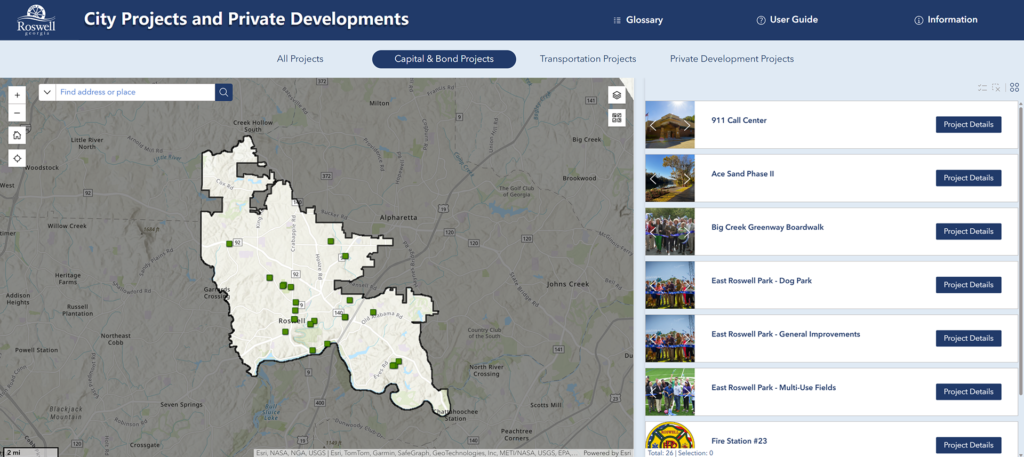
Select a project from the map or project list to view available details and status updates.